If yarn weight has ever felt confusing, you’re not alone.
Between numbers, names like “worsted” or “DK,” and inconsistent labeling between brands, it can feel like there’s a secret system you were never taught.
The good news is: yarn weight is actually simple once you understand what it’s measuring, and how it connects to your crochet hook size.
What Yarn Weight Actually Means
Yarn weight doesn’t refer to how heavy a skein is. Instead, it refers to the thickness of the yarn strand.
Thicker yarn = bigger stitches
Thinner yarn = smaller stitches
That thickness affects:
Stitch size
Drape (how fabric hangs)
Texture
How fast your project works up
This is why yarn weight is always paired with a recommended hook size.
Where to Find Yarn Weight on a Yarn Label
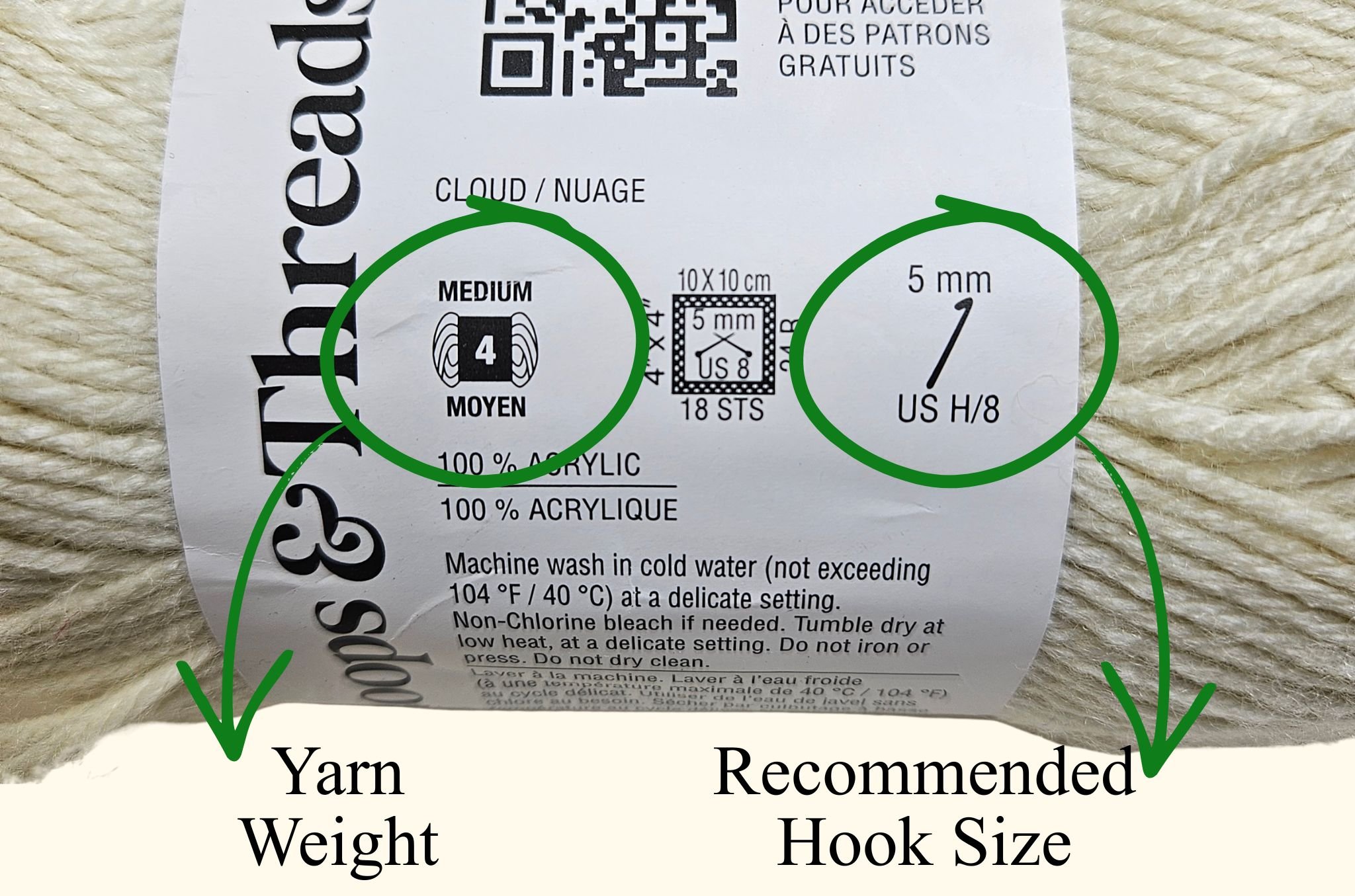
If you’re standing in the yarn aisle wondering how to tell what weight a yarn is, the good news is, you don’t have to guess. Most yarn labels will clearly show the yarn weight in a few different ways:
A number (0–7) inside a small yarn icon
A written label like “Worsted,” “DK,” or “Bulky”
A recommended hook and needle size range
The most reliable indicator is the number system (0–7) because it follows standardized yarn weight categories.
You’ll usually find this information on the back of the yarn label, often near the fiber content and yardage.
If you’re ever unsure, trust the weight category over marketing names or brand descriptions.
What “Ply” Means (and Why It’s NOT Yarn Weight)
You may also see yarn labeled as “2-ply,” “4-ply,” or “8-ply.” This refers to how many strands are twisted together to make the yarn.
Those strands are called plies. Here’s the important part: Ply does NOT determine yarn weight.
A 4-ply yarn can be fingering weight, sport weight, or even DK depending on how thick each strand is and how tightly it is spun. In modern yarn standards, yarn weight is based on thickness, not ply count.
So if you ever see ply and weight listed separately, always trust the weight category (0–7 system) first.
The Standard Yarn Weight System (0–7)
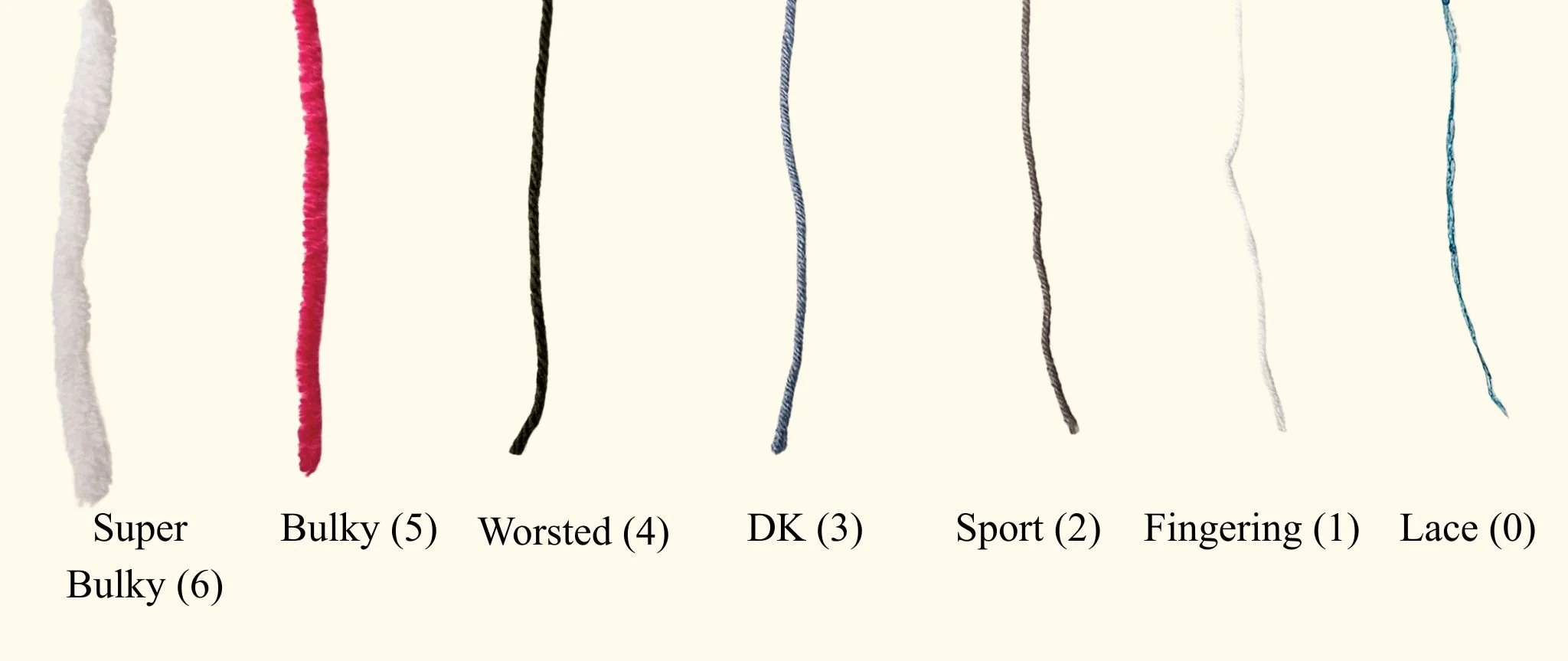
Most yarn in the U.S. follows a standardized numbering system from 0 to 7.
Here’s what those numbers actually mean:
0 – Lace weight → very fine, delicate thread-like yarn
1 – Fingering weight → light, detailed stitches
2 – Sport weight → slightly thicker, still lightweight
3 – DK / Light worsted → balanced, common for garments (my favorite pick for sweater and cardigans)
4 – Worsted weight (medium) → most common beginner yarn (what you likely think of when you think yarn)
5 – Bulky weight → thick, fast-working yarn
6 – Super bulky → very thick, chunky texture
7 – Jumbo → extremely thick, oversized stitches
You don’t need to memorize this, you just need to recognize the categories.
Yarn Weight Chart (Quick Reference)
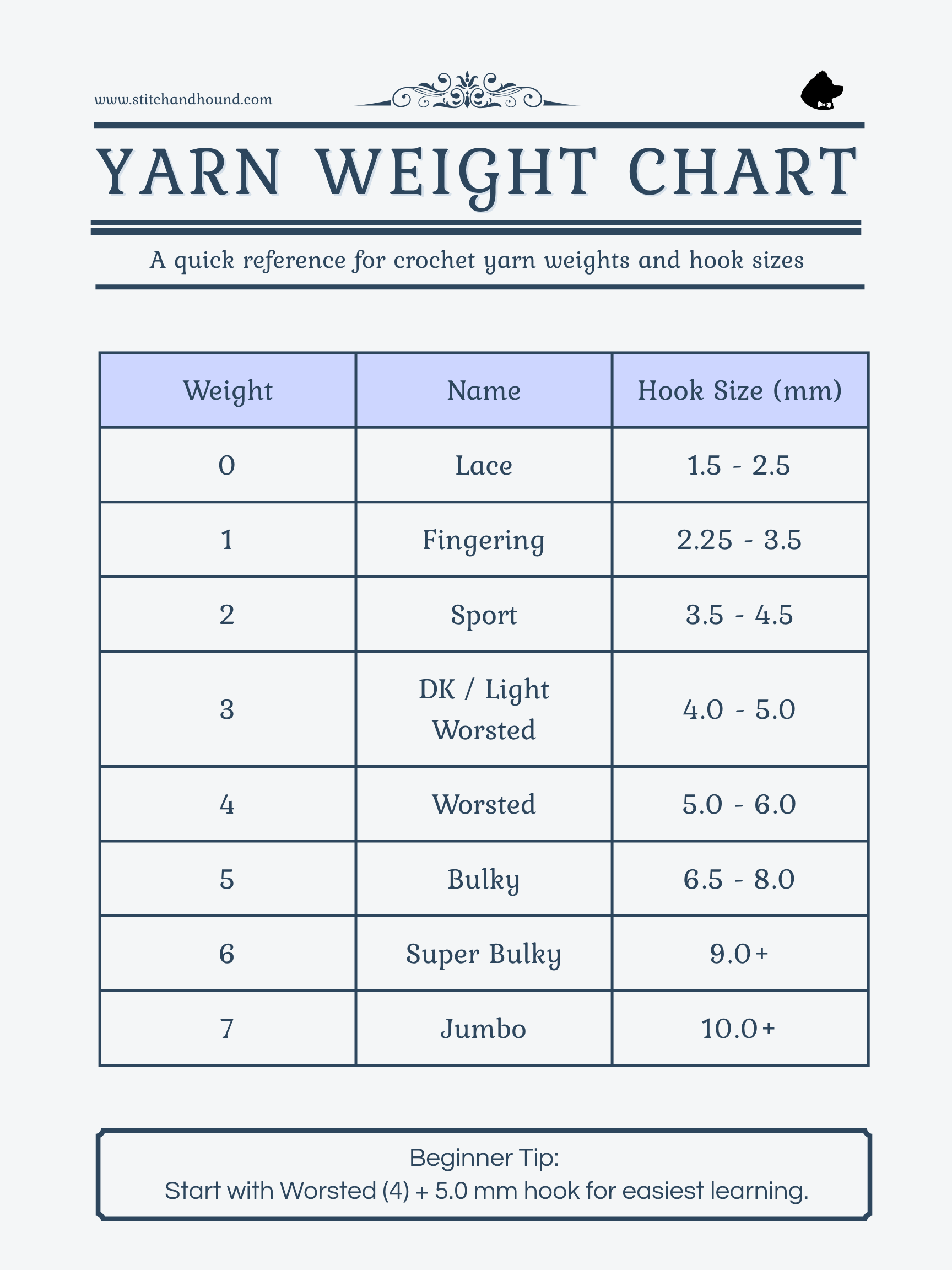
Here’s a quick reference chart for yarn weights and their typical hook sizes. This is a simple visual guide you can come back to while choosing yarn for your projects. It’s not exact for every brand, but it’s a solid starting point for beginners.
Why Yarn Weight Matters
Yarn weight doesn’t just change the look of your project, it changes how it behaves while you’re crocheting. It affects:
How easy stitches are to see
How quickly your project grows
Whether fabric feels stiff or soft
How much detail you can create
A pattern written for DK yarn won’t look the same if you substitute bulky yarn, even if you use the same hook.
Substituting Yarn Weights (What Happens If You Change Yarn)
This is one of the most common questions I get:
“Can I use a different yarn weight than the pattern says?”
The answer is yes, but you need to expect changes. If you substitute yarn weight, you will almost always need to adjust:
Hook size → to match the new yarn thickness
Yarn yardage/amount → thicker yarn uses more volume, thinner yarn uses less
Final project size → the finished item will come out larger or smaller than the original
For example:
If you turn a worsted weight amigurumi pattern into bulky yarn, you’ll get a much larger plush
If you use fingering weight instead of worsted, your project will become much smaller and more delicate
This is a great way to:
scale amigurumi into giant plushies
adjust blanket sizes
experiment with texture and drape
Just remember: when you change yarn weight, you’re not just swapping yarn, you’re changing the entire fabric.
Patterns are written and tested using a specific yarn weight, hook size, and gauge combination. If you change the yarn weight, you’re effectively changing the math behind the design (stitch size, proportions, and yardage).
Because of that, the designer can’t simply adjust instructions on the fly. Reworking a pattern for a different yarn weight requires a full redesign and rewrite.
Beginner Shortcut (Don’t Overthink This)
If you only remember one thing: Start with worsted weight (4) yarn and a 5.0 mm (H/8) hook.
This combination:
Is easy to see
Works in most beginner patterns
Is widely available
Forgives small mistakes while learning
Yarn Fiber Matters Too
Not all yarn behaves the same, even at the same weight.
For beginners:
Acrylic yarn → smooth, consistent, easy to work with
Cotton yarn → strong but can split more easily
Wool yarn → flexible, warm, great stitch definition
If you’re learning, smooth acrylic is usually the easiest place to start.
Common Beginner Mistake
One of the biggest beginner mistakes is choosing yarn based on color or texture instead of structure. If yarn is:
fuzzy
loosely spun
highly textured
…it will make learning harder than it needs to be. Start simple first. Fancy yarn comes later.
Final Thoughts
Yarn weight is really just a way of describing thickness, and once you understand that, everything else becomes easier.
When you combine:
the right yarn weight (thickness)
the right hook size
and a beginner-friendly pattern
crochet becomes much easier to learn and much more predictable.
Want to keep learning?
Understanding yarn is just one piece of becoming a confident crocheter. If you're still learning (or you've been crocheting for a while but feel like you missed some of the basics), my free 9-week Learn to Crochet email course walks you through the foundational skills step by step while we make a project together.