Crochet Materials for Beginners: Everything You Need to Get Started
Welcome to Learn to Crochet!
This lesson is part of my Learn to Crochet email course, where I walk you through the fundamentals of crochet step by step while you make your own market bag.
If you're following along with the email course, this is Week 1. If you found this lesson on your own, welcome! You can work through the lessons at your own pace or join the free email course to have each lesson delivered to your inbox.
Let's get started!
You don't need a lot of supplies to learn how to crochet.
In fact, I recommend starting with just a few basic materials. Once you've been crocheting for a while, you'll naturally develop preferences for different hooks, yarns, and tools. For now, let's keep it simple.
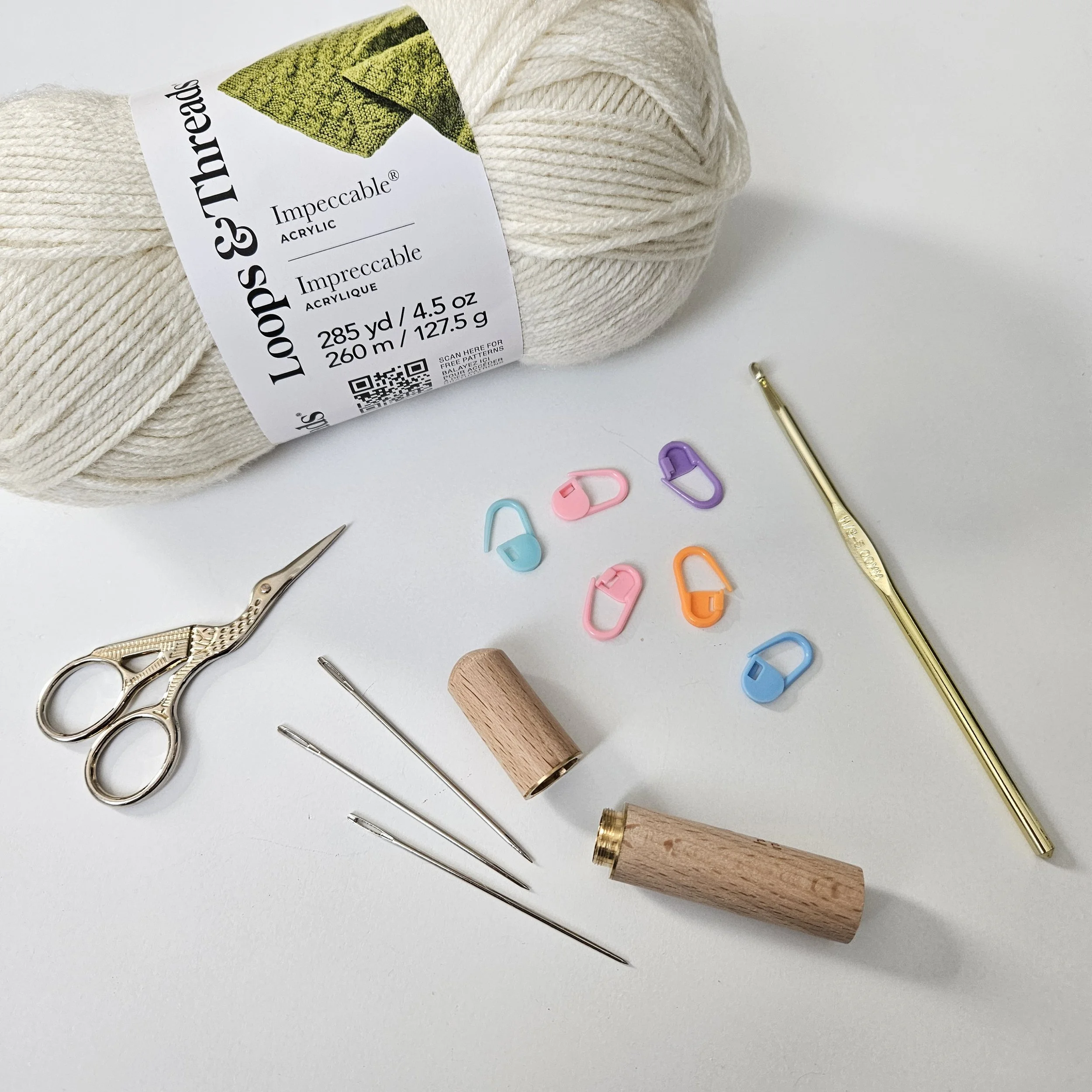
Here’s everything you need for this course:
Your Crochet Hook
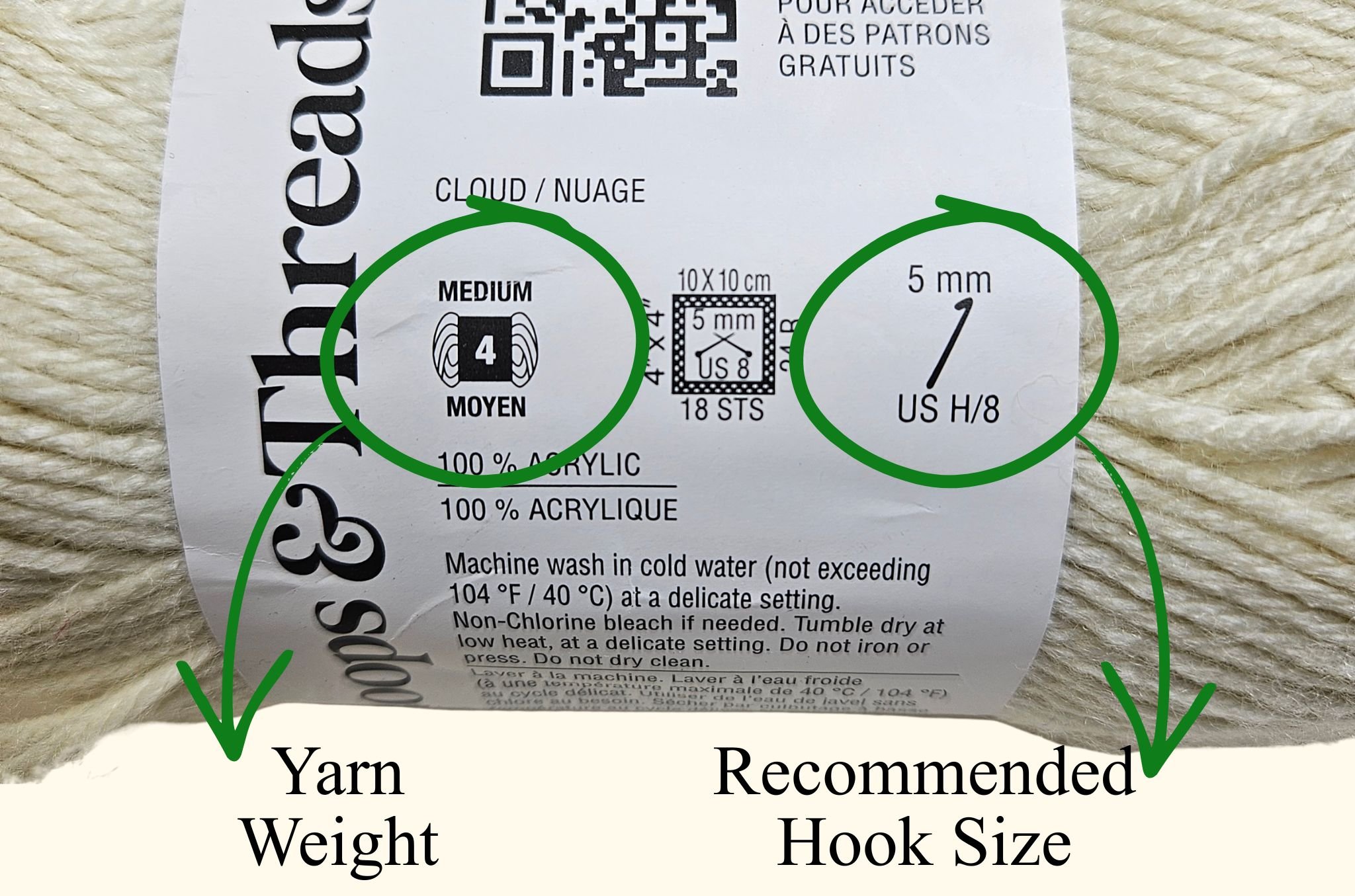
For the Learn to Crochet course, I recommend a 5 mm (H/8) aluminum crochet hook.
A 5 mm hook is a comfortable size for learning because the stitches are large enough to see clearly without being difficult to control. Aluminum is my recommended material for beginners because it's smooth, durable, affordable, and lets the yarn glide easily over the hook.
You don't need a complete hook set (and I don’t reccomend one), a 5 mm hook is all you need to get started.
Why Does Hook Size Matter?
Your hook size affects the size of your stitches. Crochet hooks are labeled by millimeter measurements, which refer to the diameter of the hook's shaft, and often by a U.S. letter or number as well. However, millimeter measurements are the most reliable way to identify hook sizes, U.S. letter and number sizes are older labeling conventions and can vary between brands).
A larger hook creates larger, looser stitches, while a smaller hook creates smaller, tighter stitches. Hook size is one of the factors that affects your gauge, which we'll talk about later in the course.
As you crochet more, you'll encounter different hook sizes and eventually develop preferences for different hook shapes, materials, and handles (which is why I don’t recommend buying a whole set of hooks before you’ve tried a few and decide what you actually like).
If you're curious about the different options, you can always come back to these guides later:
→ Best Crochet Hooks for Beginners
→ Crochet Hook Sizes Explained
You don't need to read either one before starting the course.
Your Yarn
For this course, use worsted weight (4) acrylic yarn in a light color.
There are three reasons I recommend this combination for beginners.
Worsted weight (4) yarn is thick enough that your stitches are easy to see and control, without being so thick that your project becomes difficult to handle.
Acrylic yarn is easy to work with and holds its shape well without splitting while you're learning. It's also affordable, widely available, and comes in a huge range of colors.
A light-colored yarn makes your stitches much easier to see. Dark yarn can make it surprisingly difficult to identify individual stitches when you're first learning.
For the market bag in this course, I used Loops and Threads Impeccable Yarn in the color “cloud.”
Lion Brand’s Basic Stitch Anti Pilling and Knit Pick’s Brava Worsted Yarn are also great options.
How do I know what weight my yarn is?
Yarn weight refers to the thickness of the yarn, not how much the skein weighs. You can find the yarn weight on the yarn label, usually shown as a number from 0 - 7 with a small yarn-ball symbol.
Why Does Yarn Weight Matter?
Yarn comes in different thicknesses (0 lace - 7 jumbo), and thicker yarn creates larger stitches than thinner yarn. That's why crochet patterns specify both a yarn weight and a hook size: they work together to create the intended fabric.
Why Not Cotton or Another Yarn?
You absolutely can crochet with cotton, wool, blends, and many other fibers.
We're using acrylic for this course because the goal is to make learning as easy as possible.
Different fibers have different textures, amounts of stretch, and ways of behaving as you crochet. Some yarns also split more easily than others (hello cotton and bamboo), which can be frustrating when you're still learning how to insert your hook.
As you gain experience, you'll start experimenting with different yarns and figuring out what you like.
→ Yarn Weights Explained
→ Understanding Yarn Fibers
These are reference guides you can come back to whenever you're ready to learn more. They're not required reading for this course.
A Few Other Things You'll Need
You only need a handful of basic tools to get started.
Scissors are used to cut your yarn.
A yarn needle (AKA tapestry needle or darning needle) is a blunt-tipped needle with a large eye that you'll use to weave in your yarn ends and finish your project.
Stitch markers are small markers that attach to your crochet stitches. We'll use them to help you keep track of important stitches while you're learning. You don't need anything fancy. If you don't have stitch markers yet, you can even use a small scrap of contrasting yarn or even paper clips.
A measuring tape is useful for checking the size of your crochet. A ruler will work for now, but I recommend eventually getting a soft, retractable measuring tape. You'll need one when you start checking gauge and measuring garments or other projects where accurate measurements matter.
Your Beginner Crochet Supply List
For this course, gather:
That's it.
You don't need a giant collection of hooks, every color of yarn, or a drawer full of specialty tools.
Start with what you need to learn. Build your supplies as you build your skills.
*I recommend having 2 skeins of yarn on hand for the market bag. Depending on your tension and the yarn you choose, you may use more than one skein, and I don't want you to get to the end of the project and run out of yarn!
Continue Learning
If you're learning crochet on your own, continue with the next lesson in the Learn to Crochet series: How to Hold a Hook and Yarn.
Taking the email course? Your next lesson and practice assignment will be in your next email.