Crochet Stitch Height Chart (With Turning Chains)
Understanding crochet stitch height is one of the keys to understanding how to create beautiful crochet fabric. Each crochet stitch has a different height, which affects how dense or open your fabric will be. Taller stitches create more space and movement for a light, airy, beachy feel, while shorter stitches form a tighter, denser fabric that’s perfect for warmth and structure. Choosing the right stitch height helps you control the drape, texture, and overall look of your project from the very beginning.
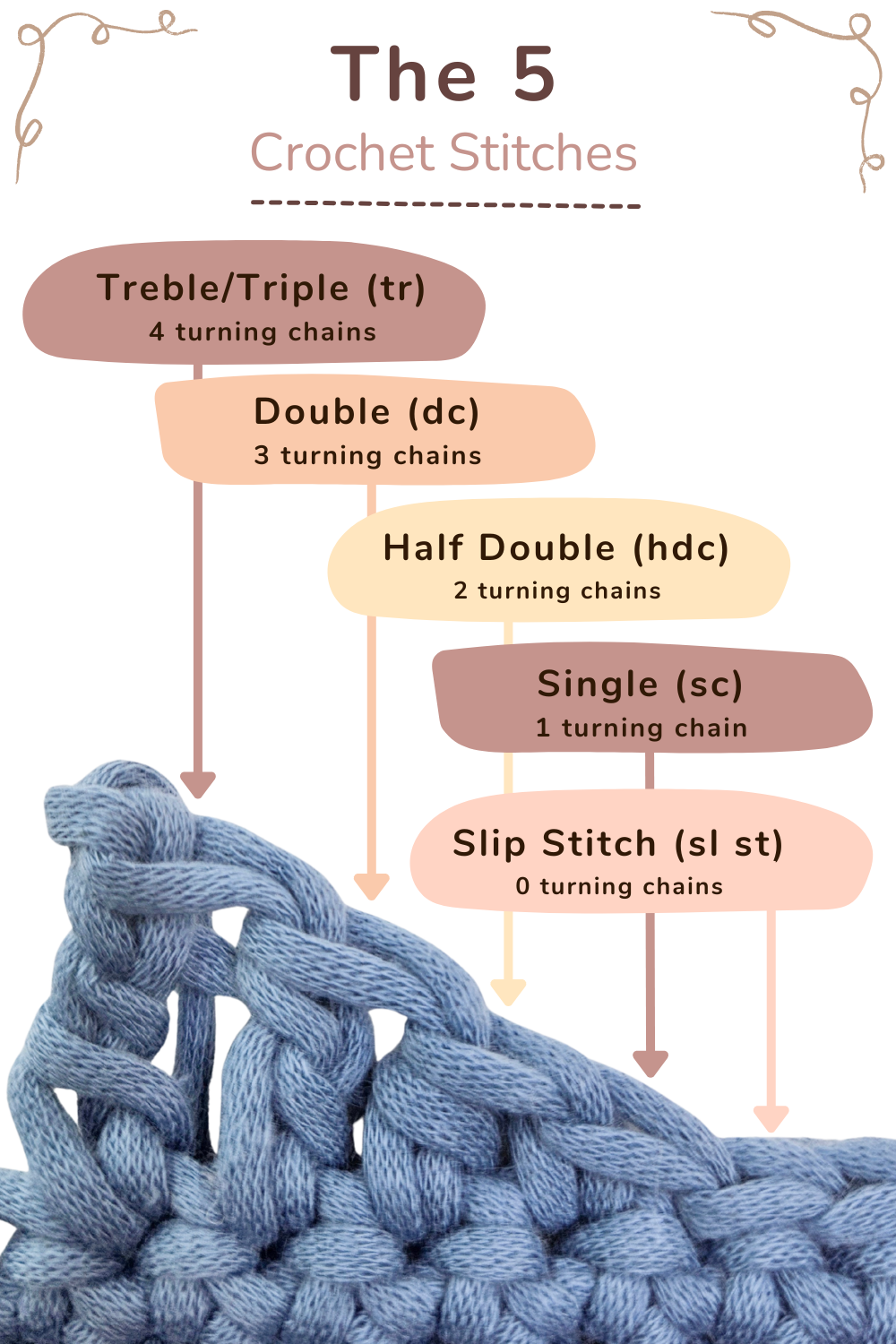
This crochet stitch height chart shows the relative height of the five foundational crochet stitches (since every other stitch is just a variation of these basics). It ranges from the shortest slip stitch to the tallest treble crochet, and also includes the typical turning chains used when starting a new row.
Crochet Stitch Height Chart
Crochet stitches increase in height based on how many yarn overs are worked into the stitch. More yarn overs create taller stitches.
Here is the typical order of crochet stitches from shortest to tallest:
Why Stitch Height Matters in Crochet
Understanding stitch height helps crocheters in several ways:
Creating Unique Stitch Patterns
Patterns rely on stitch height to create the intended shape and texture. For example, by combining stitches of different heights (like alternating single crochet and double crochet) you can create a fabric with contrast and texture.
Creating Shape and Slope
Designers often combine stitches of different heights to create smooth transitions. For example:
sc → hdc → dc → tr → dc → hdc → sc
This gradual change in stitch height creates a gentle slope rather than a sharp edge.
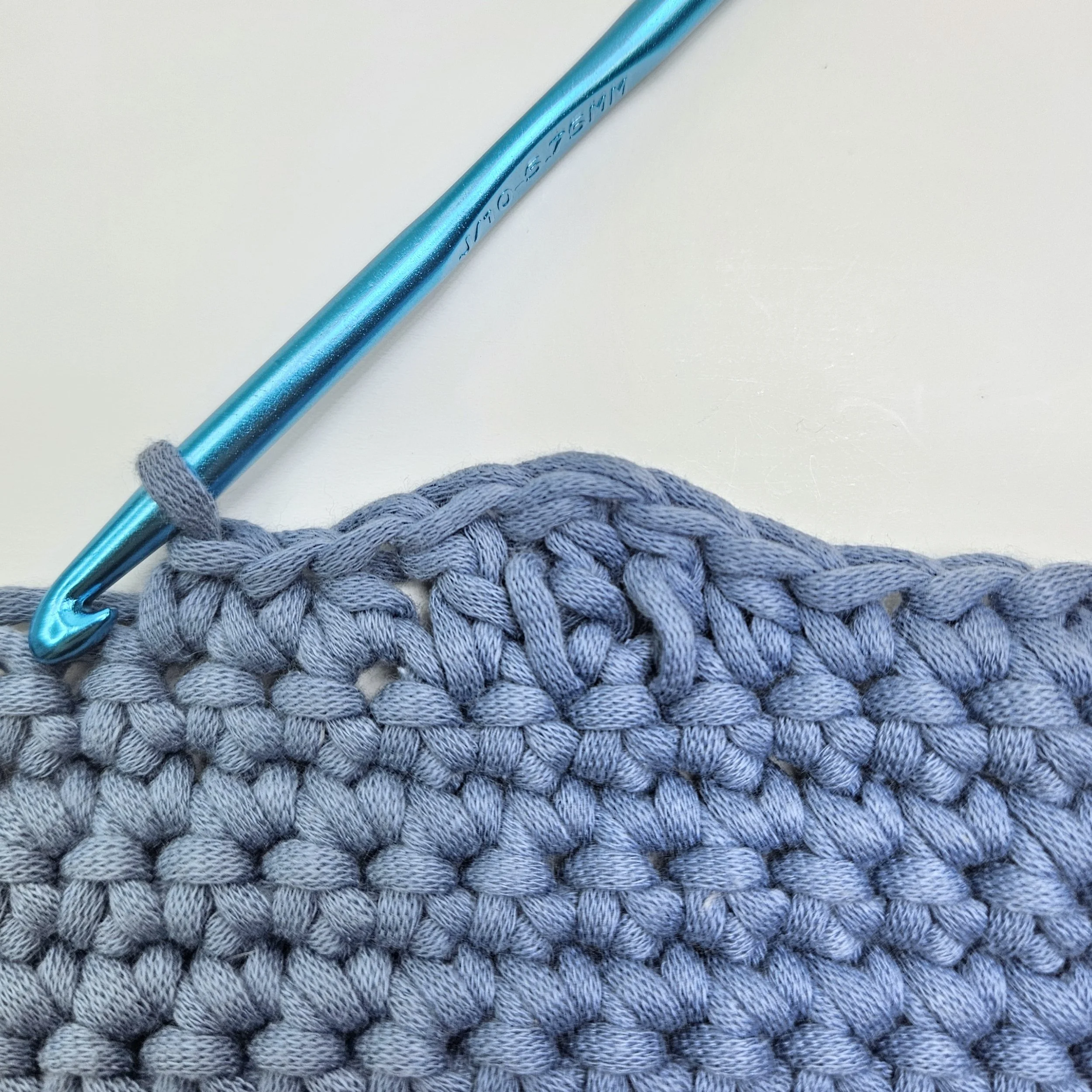
Adjusting Fabric Density
Short stitches create tighter, denser fabric, while taller stitches create lighter, more open fabric.
For example:
Single crochet produces sturdy, dense fabric that works well for amigurumi and washcloths.
Double crochet or treble crochet creates a softer, more flexible fabric that is great for summer garments and blankets.
Crochet Turning Chains Explained
When starting a new row, crocheters typically chain a certain number of stitches to match the height of the first stitch in the row. These chains help bring the yarn up to the correct height before beginning the next row.
Here are the most common turning chains:
slip stitch: 0
single crochet: 1
half double crochet: 2
double crochet: 3
treble/triple crochet: 4
Here’s something that trips a lot of people up: some designers count the turning chain as a stitch, and some don’t. Generally, turning chains are counted as a stitch with taller stitches like double and treble crochet, and not counted with shorter stitches like single and half double crochet. However, there’s no universal rule. Always check the pattern notes so you know what the designer intended.
Also, a little real-world tip: the “standard” turning chains don’t work for everyone. I crochet pretty tightly, so I don’t use as many chains as patterns typically call for. For me, 2 chains gets me to the height of a double crochet, and 3 chains works for a treble. If I did the full recommended number, my edges would look too loose.
So don’t be afraid to experiment. Your goal is a turning chain that matches the height of your stitches and keeps your edges looking clean and consistent with your tension.
Tips for Working with Different Stitch Heights
Keep Consistent Tension
Because taller stitches use more yarn, maintaining consistent tension helps ensure the fabric remains even.
Watch Your Turning Chains
Turning chains that are too tight can pull the edge of the project inward, while chains that are too loose can create gaps along the sides. Remeber, rules aren’t universal, use what works for you!
Practice Basic Stitches
If learning crochet, it helps to practice each stitch individually before combining them in patterns.
The most common foundational stitches include:
Slip stitch
Single crochet
Half double crochet
Double crochet
Treble crochet
Mastering these stitches makes it much easier to follow crochet patterns. Click here to learn to create each of these stitches with both a photo and video tutorial.
Beginner Resources for Learning Crochet
If learning crochet, these tutorials will help build a strong foundation:
How to read crochet patterns (coming soon!)
These core skills make it much easier to tackle beginner-friendly patterns and more advanced designs later on.
Final Thoughts
Learning the height of crochet stitches helps crocheters understand patterns, control fabric texture, and create smooth shaping in projects. A simple stitch height chart can be a helpful reference when practicing new stitches or designing crochet projects.
Once familiar with the differences between slip stitch, single crochet, half double crochet, double crochet, and treble crochet, it becomes much easier to follow patterns and experiment with new stitch combinations.
Ready to put it into practice? Try one of these beginner-friendly patterns to build on the skills you’ve learned: