How to Choose the Right Hook
Starting crochet can feel overwhelming when you're standing in the yarn aisle staring at dozens of different hooks.
Should you buy aluminum hooks? Ergonomic hooks? A full set? Which size should you start with?
The good news is that beginners don't need an expensive collection of tools. In this guide, I'll explain what to look for in a crochet hook, which types are easiest to use, and which size is best for learning.
First, remember to PIN this tutorial so you can reference it later:

Just a heads-up: This blog post may contain affiliate links. Don't worry, though, these links are a win-win! They help support our site without costing you a penny extra. So, if you find something you love, clicking through won't just benefit us, but it'll also help you discover great products and resources!
Best Crochet Hooks for Beginners (What to Buy + What to Skip)
If you’ve ever stood in the crochet aisle wondering why there are so many hooks, you’re not alone.
The good news? You do not need to figure everything out before you start crocheting. In reality, you only need one hook to get going.
Let’s break it down simply so you can start with confidence.
My Simple Recommendation for Beginners
If you’re buying your very first crochet hook, start here:
That combination is the “sweet spot” for beginners because your stitches are easy to see, the yarn is easy to control, most beginner patterns use this setup, and it’s affordable and easy to find.
You don’t need a full set, fancy tools, or specialty hooks to start. One good hook is enough.
What a Crochet Hook Actually Does (Without Overthinking It)
A crochet hook is simply the tool you use to pull yarn through loops to form stitches. But what matters more than the definition is this: different hooks can change how crochet feels.
Hook size affects stitch size and visibility
Hook material affects how the yarn moves
Hook shape affects comfort and control
That’s why you’ll see so many options, but you only need to focus on a few when starting out.
Start Here: What Beginners Actually Need
When you’re brand new, the goal is simple: make learning easy.
Stick with a medium hook size
5.0 mm (H/8) is ideal
Easy to see stitches
Works with most beginner patterns
Pair it with the right yarn
Light-colored worsted weight acrylic yarn
Avoid dark yarn (hard to see stitches)
Avoid fuzzy or novelty yarns (hard to control)
Avoid splitty cotton yarn while learning
Acrylic yarn is especially beginner-friendly because the strands stay together well, making it easier to avoid accidentally splitting your stitches.
A Quick Note on Yarn Splitting (This Matters More Than You Think)
Some yarns split more easily than others.
This often happens with loosely spun cotton yarns. As you crochet, the motion of your hook can loosen the twist that holds the yarn together. When that happens, the strands separate, and your hook may catch only part of the yarn instead of the whole stitch.
It’s frustrating, and not your fault.
That’s why I recommend starting with a smooth acrylic yarn first. It makes learning significantly easier.
(If you prefer to avoid synthetic fibers, wool is a great natural alternative. Just look for a wool yarn that is tightly spun or slightly felted, since loosely plied or fuzzy wool can behave similarly to splitty cotton.)
The Different Types of Crochet Hooks
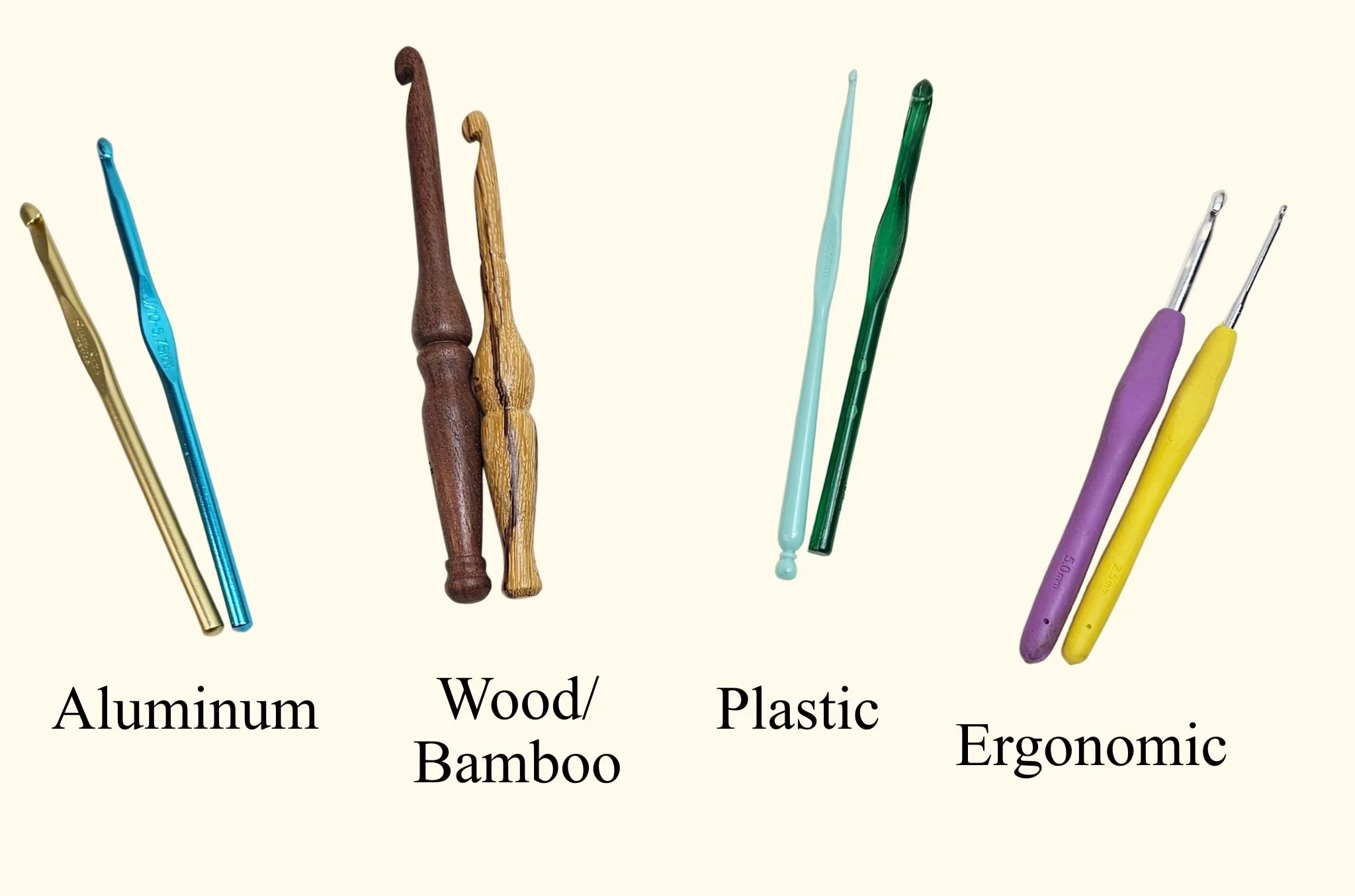
Once you start shopping, you’ll notice hooks come in different materials. Here’s what actually matters.
Aluminum Crochet Hooks (Best for Beginners)
These are my top recommendation for new crocheters.
Smooth and easy to work with
Affordable and widely available
Great for learning stitch control
This is also what I personally use most often. That said, everyone develops preferences over time, so don’t stress about picking the “perfect” one.
Ergonomic Crochet Hooks
These have padded or shaped handles designed for comfort.
Easier on hands and wrists
Great for long crochet sessions
More expensive than basic hooks
If you continue crocheting regularly, these can be a great upgrade later.
Plastic Crochet Hooks
These are usually found in budget hook sets.
Lightweight and inexpensive
Often less smooth than aluminum
Can feel less durable
They work, but I don’t recommend them as your main beginner hook.
Wood and Bamboo Crochet Hooks
These have more grip and a natural feel.
Slight resistance helps control yarn
Comfortable and lightweight
Can slow down stitches slightly
Some crocheters love them, especially for slippery yarns.
Inline vs Tapered Crochet Hooks (Don’t Stress This Yet)
As you explore hooks, you may hear these terms:
Inline hooks
Deeper groove
More structured hook shape
Example: Susan Bates
Tapered hooks
More rounded hook head
Smoother glide through stitches
Example: Clover, most ergonomic hooks
Here’s the honest truth: you don’t need to worry about this as a beginner.
Most crocheters only notice a preference after they’ve made several projects. Try different hooks when you can, and let your hands decide.
Should Beginners Buy a Crochet Hook Set?
Short answer: not yet.
Start with one 5.0 mm (H/8) hook because when you’re new, you don’t know what grip you like, what material feels best, or how often you’ll crochet.
Instead of buying an entire set right away, I recommend buying hooks as you need them for projects. If a pattern calls for a 4.0 mm hook, pick up a 4.0 mm hook in a style that looks interesting to you. Maybe you try an ergonomic hook for one project and a bamboo hook for another.
As you crochet more, you'll naturally start reaching for certain hooks over and over again. Once you've figured out what you actually enjoy using, that's the perfect time to invest in a complete set. You'll end up with a collection of hooks you love instead of a drawer full of hooks you never use.
Specialty Hooks You Can Ignore (For Now)
You may see these in stores:
Double-ended crochet hooks
Hooks on both ends used for advanced techniques. Not needed for beginners.
Tunisian crochet hooks
Long hooks or cable hooks used for Tunisian crochet (a mix of crochet and knitting). These are fun later, but not where you start.
My Recommended Beginner Setup
If I were setting you up for success, I’d give you:
That’s it. You don’t need anything more to start learning crochet confidently. There's no need to spend a lot of money before you know whether crochet is a hobby you'll enjoy.
Frequently Asked Questions
What crochet hook is easiest for beginners?
A smooth aluminum crochet hook is typically the easiest option for beginners because the yarn slides easily across the hook and the hooks are affordable (you can get them for a couple of dollars at Walmart).
What size crochet hook should a beginner use?
A 5.0 mm (H/8) crochet hook paired with light-colored, acrylic, worsted weight (4) yarn is one of the easiest combinations for learning crochet.
Are ergonomic crochet hooks worth it?
Yes, but not right away. They’re great for comfort, but beginners can learn just fine with basic aluminum hooks.
Should I buy a crochet hook set as a beginner?
No. Start with one hook first. Once you know what you like, then investing in a set makes sense.
Final Thoughts
The best crochet hook for beginners isn’t the fanciest one, it’s the one that helps you learn without frustration.
Start simple:
One 5.0 mm hook
One skein of light yarn
One small project
As you gain experience, you’ll naturally figure out what materials, shapes, and styles you prefer.
And once you’re ready, you can explore more specialized hooks and build a collection that truly works for you.
➜ Next Lesson: Crochet Hook Sizes Explained
Now that you know what to look for in a crochet hook, head over to Crochet Hook Sizes Explained to understand how hook sizes work and how to choose the right one for your project.